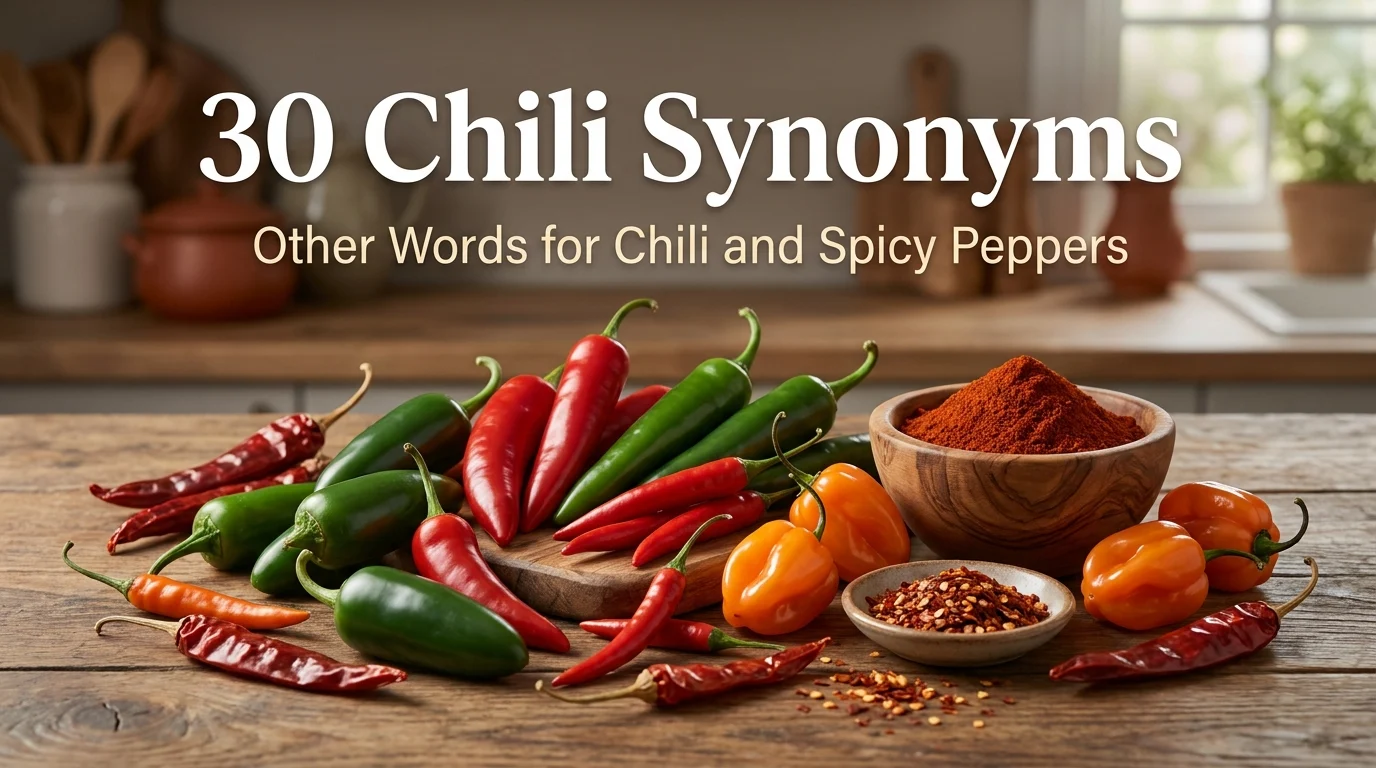
The word chili is commonly used when talking about spicy peppers, hot ingredients, and flavorful foods. It can refer to a small, spicy pepper, a powder made from dried peppers, or a hearty dish prepared with beans, meat, tomatoes, and seasonings.
Because the word has several meanings, finding the right chili synonyms depends on the context in which it is used.
If you are a student, ESL learner, writer, or content creator, learning alternative words for chili can help you improve your vocabulary and make your writing more descriptive.
For example, words such as hot pepper, chile, cayenne, and capsicum can describe different types of chili peppers, while terms such as pepper stew and spicy stew can describe chili as a dish.
In this guide, you will discover 30 chili synonyms and related words, their simple meanings, example sentences, and the situations in which they work best.
You will also learn how to choose the most appropriate alternative based on whether you are discussing peppers, spices, or food.
What Does Chili Mean?
Chili is a word used for hot peppers and spicy dishes made with chili peppers. It is associated with the spicy flavor produced by a natural compound called capsaicin, which creates a burning sensation in the mouth.
The word can have different meanings depending on the situation:
- Chili pepper: A spicy fruit used in cooking.
- Chili powder: A seasoning made from dried and ground peppers, sometimes combined with other spices.
- Chili dish: A thick, savory meal often prepared with beans, meat, tomatoes, and spices.
- Chili flavor: A hot, spicy taste found in different foods.
Chili is also spelled chile or chilli in different English-speaking regions. These spelling variations are useful to recognize when reading recipes, food labels, and articles.
30 Chili Synonyms and Related Words
Here are 30 alternative words and related expressions for chili. Some are close synonyms, while others refer to particular pepper varieties, chili products, or spicy dishes.
1. Hot Pepper
Meaning: A pepper that produces a hot or spicy sensation when eaten.
Example: She added a hot pepper to the soup to make it more flavorful.
Best usage context: Use this general term when describing spicy peppers in recipes or everyday conversations.
2. Chile
Meaning: Another spelling of chili, commonly used in American English, especially in food and pepper names.
Example: The restaurant serves delicious chicken with green chile sauce.
Best usage context: Use it when discussing Mexican cuisine, pepper varieties, and traditional recipes.
3. Chilli
Meaning: A spelling variation of chili commonly used in British English and other varieties of English.
Example: He added fresh chilli to the vegetable curry.
Best usage context: Best for British English, international recipes, and food-related writing.
4. Capsicum
Meaning: A botanical term for the group of plants that includes chili peppers and sweet peppers.
Example: Capsicum plants produce peppers in different shapes, sizes, and colors.
Best usage context: Use it in scientific, botanical, or educational writing.
5. Cayenne Pepper
Meaning: A type of moderately hot red pepper that is often dried and ground into powder.
Example: A little cayenne pepper gives the sauce an extra kick.
Best usage context: Use it when referring to a specific hot pepper or seasoning.
6. Jalapeño
Meaning: A medium-hot green or red chili pepper commonly used in Mexican cooking.
Example: She topped her nachos with sliced jalapeños.
Best usage context: Ideal for describing a particular chili variety in recipes.
7. Habanero
Meaning: A small pepper known for its intense heat and fruity flavor.
Example: The chef used a tiny piece of habanero to make the salsa extremely spicy.
Best usage context: Use it when discussing very hot peppers or spicy recipes.
8. Serrano Pepper
Meaning: A small, green or red Mexican pepper that is generally hotter than a jalapeño.
Example: Fresh serrano peppers added a sharp flavor to the homemade salsa.
Best usage context: Best for Mexican food descriptions and specific pepper varieties.
9. Poblano
Meaning: A large Mexican pepper with a mild heat level and rich flavor.
Example: The restaurant prepared roasted poblano peppers filled with cheese.
Best usage context: Use it when describing mild chili peppers in traditional dishes.
10. Bird’s Eye Chili
Meaning: A small, extremely hot chili pepper commonly used in Southeast Asian cooking.
Example: The curry became much hotter after she added a bird’s eye chili.
Best usage context: Suitable for Asian recipes and descriptions of very spicy peppers.
11. Scotch Bonnet
Meaning: A very hot Caribbean pepper with a fruity, slightly sweet flavor.
Example: Scotch bonnet peppers give Caribbean jerk chicken its distinctive heat.
Best usage context: Use it when discussing Caribbean cooking and spicy pepper varieties.
12. Ghost Pepper
Meaning: An extremely hot chili pepper also known as Bhut Jolokia.
Example: The spicy sauce contained ghost pepper, so only a small amount was needed.
Best usage context: Best for writing about exceptionally hot peppers and extreme spice.
13. Red Pepper
Meaning: A general term that can describe red-colored peppers, including some hot chili varieties.
Example: He sprinkled crushed red pepper over his pizza.
Best usage context: Use it in everyday cooking conversations. Remember that red pepper can also refer to sweet peppers, depending on context.
14. Green Chili
Meaning: A chili pepper that is harvested while green or used in its green form.
Example: Green chili gave the homemade chutney a fresh and spicy flavor.
Best usage context: Useful for Indian, Mexican, and other international recipes.
15. Red Chili
Meaning: A red-colored chili pepper, often fully ripened and sometimes dried.
Example: The cook added red chili to make the sauce hotter.
Best usage context: Use it when discussing dried or fresh red peppers.
16. Chili Flakes
Meaning: Small pieces of dried chili peppers used to add heat to food.
Example: Add chili flakes to the pasta if you enjoy spicy meals.
Best usage context: Ideal for recipes, seasoning instructions, and food descriptions.
17. Chili Powder
Meaning: A powdered seasoning made from ground chili peppers, sometimes mixed with other spices.
Example: The recipe requires two teaspoons of chili powder.
Best usage context: Use it when referring to a dry seasoning rather than a fresh pepper.
18. Paprika
Meaning: A red powder made from dried ground peppers, usually mild but sometimes hot.
Example: She sprinkled paprika over the roasted potatoes.
Best usage context: Use it when discussing pepper-based seasonings. Not all paprika is spicy.
19. Cayenne
Meaning: A short name for cayenne pepper, especially when referring to its ground form.
Example: Add a pinch of cayenne to give the soup some heat.
Best usage context: Useful in recipes and cooking instructions.
20. Pepperoncini
Meaning: A mild, slightly tangy pepper commonly served pickled.
Example: He added pepperoncini to his sandwich for extra flavor.
Best usage context: Use it when describing mild peppers in salads, sandwiches, and Mediterranean dishes.
21. Anaheim Pepper
Meaning: A mild to moderately spicy green pepper commonly used in Mexican and Southwestern American cooking.
Example: The chef roasted Anaheim peppers before adding them to the casserole.
Best usage context: Suitable for recipes that call for mild green chili peppers.
22. Fresno Pepper
Meaning: A small red or green pepper with a heat level similar to or sometimes greater than a jalapeño.
Example: Fresh Fresno peppers added color and heat to the homemade salsa.
Best usage context: Use it when describing fresh peppers in sauces and modern recipes.
23. Thai Chili
Meaning: A small, hot pepper commonly used in Thai and other Southeast Asian dishes.
Example: Thai chili gave the noodle soup a strong spicy flavor.
Best usage context: Best for Asian cooking, sauces, soups, and spicy food descriptions.
24. Chipotle
Meaning: A smoked and dried jalapeño pepper that has a rich, smoky flavor.
Example: The chef used chipotle to give the barbecue sauce a smoky taste.
Best usage context: Use it when describing smoky chili ingredients, sauces, and Mexican-inspired food.
25. Chili Con Carne
Meaning: A spicy dish traditionally made with meat, chili peppers, tomatoes, and seasonings, often including beans.
Example: We enjoyed a warm bowl of chili con carne on a cold evening.
Best usage context: Use it when referring to a specific type of chili meal.
26. Spicy Stew
Meaning: A thick, cooked dish containing vegetables, meat, beans, or other ingredients with spicy seasonings.
Example: The family prepared a spicy stew with tomatoes, beans, and fresh peppers.
Best usage context: A descriptive alternative when chili refers to a meal rather than a pepper.
27. Pepper Stew
Meaning: A stew prepared with peppers as an important ingredient.
Example: The pepper stew was served with warm bread for dinner.
Best usage context: Use it when describing a pepper-based dish. It is not an exact substitute for every chili recipe.
28. Hot Sauce
Meaning: A liquid condiment made with hot peppers and other ingredients to add spicy flavor to food.
Example: He added hot sauce to his burger before taking a bite.
Best usage context: Use it when referring to a spicy condiment rather than a whole chili pepper.
29. Salsa
Meaning: A sauce or condiment commonly made with tomatoes, peppers, onions, and other ingredients.
Example: Fresh salsa with chopped chili made the tacos more flavorful.
Best usage context: Best for Mexican inspired food and spicy sauces. Salsa is not necessarily hot.
30. Spicy Pepper
Meaning: A general expression for a pepper that has a noticeable hot or spicy taste.
Example: This spicy pepper adds a strong flavor to traditional dishes.
Best usage context: Use it when you want a simple, descriptive alternative to chili pepper.
Comparison Table: Which Chili Synonym Should You Use?
Different chili synonyms work in different situations. The following table makes it easier to understand which word is most appropriate.
| Word | Main meaning | Best context |
|---|---|---|
| Hot pepper | Spicy pepper | Everyday English |
| Chile | Chili spelling variation | American English |
| Chilli | Chili spelling variation | British English |
| Capsicum | Pepper plant group | Scientific writing |
| Cayenne pepper | Specific hot pepper | Cooking |
| Jalapeño | Medium hot pepper | Mexican recipes |
| Habanero | Very hot pepper | Spicy food |
| Serrano | Hot Mexican pepper | Salsa and sauces |
| Poblano | Mild Mexican pepper | Stuffed dishes |
| Bird’s eye chili | Very hot small pepper | Asian cooking |
| Scotch bonnet | Hot Caribbean pepper | Caribbean recipes |
| Ghost pepper | Extremely hot pepper | Extreme spice |
| Chili flakes | Dried pepper pieces | Seasoning |
| Chili powder | Ground chili seasoning | Recipes |
| Paprika | Ground pepper seasoning | Cooking |
| Chipotle | Smoked dried jalapeño | Smoky sauces |
| Chili con carne | Meat based chili dish | Main meals |
| Spicy stew | Hot, thick meal | Food descriptions |
| Hot sauce | Spicy condiment | Table seasoning |
| Salsa | Pepper based sauce | Mexican inspired food |
Different Types of Chili and Their Uses
Chili peppers come in many varieties. Each has a different level of heat, flavor, and culinary purpose.
Understanding these differences can help you choose more accurate vocabulary when writing about food.
Mild Chili Peppers


Mild chili peppers add flavor without producing overwhelming heat.
Examples include:
- Poblano: Commonly used for stuffing and roasting.
- Anaheim: Suitable for soups, sauces, and casseroles.
- Pepperoncini: Often pickled and served with sandwiches or salads.
Medium-Hot Chili Peppers


These peppers provide noticeable heat while maintaining a balanced flavor.
Examples include:
- Jalapeño: Popular in nachos, tacos, and salsa.
- Serrano: Often used in fresh sauces and Mexican dishes.
- Fresno: Adds color and a bright pepper flavor to recipes.
Very Hot Chili Peppers


Very hot peppers are generally used in smaller quantities because of their intense heat.
Examples include:
- Habanero: Known for its fruity flavor and strong heat.
- Bird’s eye chili: Popular in Southeast Asian food.
- Ghost pepper: Famous for its extremely high heat level.
Chili vs. Chile vs. Chilli: What Is the Difference?
The words chili, chile, and chilli are different spellings of the same basic word. Their usage often depends on regional English preferences.
| Word | Common usage | Example |
|---|---|---|
| Chili | American English | Chili peppers |
| Chile | American English, especially Southwestern and Mexican food contexts | Green chile |
| Chilli | British English and many international varieties | Fresh chilli |
Although these spellings are interchangeable in many situations, it is best to follow one spelling consistently throughout an article or recipe.
Also, remember that chili can refer to a pepper or a cooked dish. The surrounding sentence helps determine its meaning.
How to Choose the Right Chili Synonym
Choosing the right chili synonym depends on what you are describing. A pepper variety, seasoning, and prepared dish are not the same thing.
Here are some simple guidelines.
1. When Talking About Chili Peppers
Use these alternatives when discussing fresh peppers:
- Hot pepper
- Spicy pepper
- Jalapeño
- Habanero
- Serrano pepper
- Poblano
- Bird’s eye chili
For example:
“Add one fresh jalapeño to the salsa.”
This is more specific than simply saying, “Add one chili.”
2. When Talking About Chili Seasonings
Use these words when describing ingredients that add heat or flavor:
- Chili powder
- Chili flakes
- Cayenne pepper
- Paprika
- Cayenne
- Chipotle
For example:
“Sprinkle some chili flakes over the pizza.”
This gives the reader a clearer idea of which ingredient to use.
3. When Talking About Chili as Food
Use these expressions when describing a cooked meal:
- Chili con carne
- Spicy stew
- Pepper stew
For example:
“We prepared a spicy stew with beans and tomatoes for dinner.”
These expressions describe a dish instead of a single pepper.
4. When Writing for a Specific Audience
Your choice of spelling and vocabulary can also depend on your readers.
- For American readers, use chili.
- For British readers, use chilli.
- For botanical or scientific writing, use Capsicum where appropriate.
- For recipe instructions, use specific pepper names such as jalapeño or cayenne pepper.
Using accurate terms makes your writing easier to understand and more informative.
Why Learning Chili Synonyms Is Important
Learning alternative words for chili can improve your vocabulary and make your communication more effective.
Here are a few important benefits.
1. Improves vocabulary: Learning words such as cayenne, jalapeño, and capsicum introduces you to different pepper varieties and their meanings.
2. Makes writing more descriptive: Instead of repeatedly using the word chili, you can choose more specific expressions that describe the ingredient accurately.
3. Helps with cooking: Understanding the differences between chili powder, chili flakes, and fresh chili peppers makes recipes easier to follow.
4. Supports ESL learning: Regional spellings and food-related vocabulary help English learners understand menus, recipes, and everyday conversations.
5. Improves communication: Using precise words helps readers understand whether you mean a pepper, a seasoning, or a prepared dish.
Frequently Asked Questions About Chili Synonyms
1. What is another word for chili?
Some common alternatives for chili include hot pepper, chile, chilli, capsicum, and spicy pepper. The best choice depends on if you are referring to a pepper or a prepared dish.
2. What are the most common synonyms for chili pepper?
Common alternatives and related terms include hot pepper, red pepper, cayenne pepper, jalapeño, serrano pepper, and bird’s eye chili.
3. Is chile another word for chili?
Yes. Chile is an alternative spelling of chili, especially common in American English and Southwestern food terminology.
4. What is the British spelling of chili?
The British spelling is generally chilli, with two letter Ls.
5. Is capsicum the same as chili?
Not exactly. Capsicum refers to a group of plants that includes both sweet peppers and hot chili peppers. The term is used more broadly than chili.
6. What is another word for spicy pepper?
You can use hot pepper, chili pepper, red pepper, or a specific pepper name such as jalapeño or cayenne pepper.
7. Are chili powder and chili flakes the same?
No. Chili powder is a ground seasoning, while chili flakes are small pieces of dried chili peppers. They can both add heat to food, but their texture and preparation are different.
8. What are some words related to chili food?
Related expressions include spicy stew, pepper stew, chili con carne, hot sauce, salsa, and spicy sauce.
9. What is the difference between chili and pepper?
Pepper is a broader word that can refer to several types of peppers, including sweet and spicy varieties. Chili usually refers to hot peppers or dishes made with them.
10. What is the best synonym for chili in everyday English?
Hot pepper is one of the simplest and most widely understood alternatives when referring to a chili pepper. If you mean the cooked meal, the appropriate word depends on the recipe.
Conclusion
Learning chili synonyms is a useful way to expand your vocabulary and understand different food related expressions.
Words such as hot pepper, chile, chilli, capsicum, and cayenne pepper can help describe chili peppers, while expressions such as chili con carne and spicy stew are more suitable when talking about prepared dishes.
However, not every related word is an exact synonym. A jalapeño is a particular type of chili pepper, chili powder is a seasoning, and hot sauce is a condiment. Understanding these differences helps you choose the right word for your sentence.
If you are writing a recipe, improving your English, or exploring new food vocabulary, these 30 chili synonyms and related terms can make your communication clearer, more accurate, and more interesting.

I am Derek Thomas, a passionate word enthusiast and writer. I enjoy exploring synonyms, expanding vocabulary, and helping readers find clear, accurate, and meaningful words for better writing.