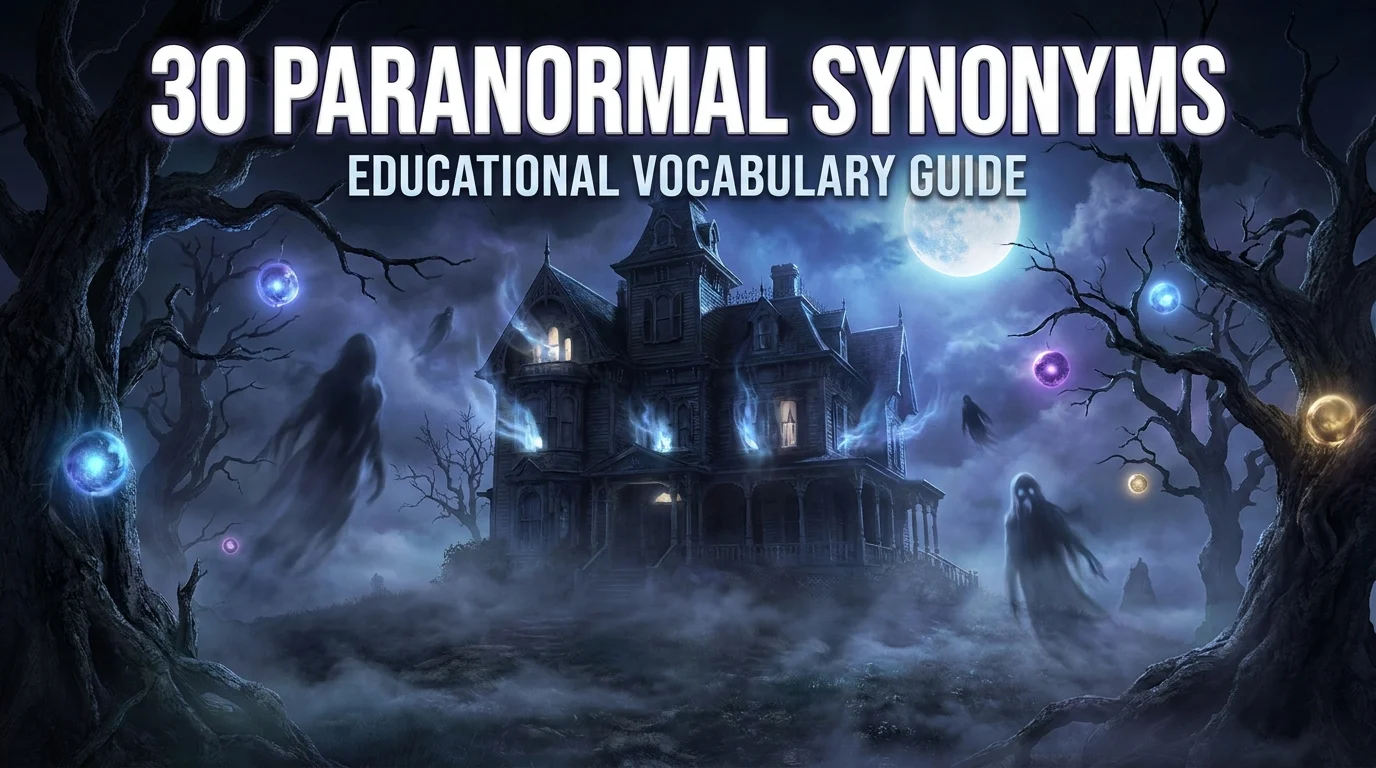
The word paranormal describes events, experiences, or phenomena that appear to go beyond what science can normally explain.
It is commonly associated with ghosts, spirits, psychic abilities, haunted places, unexplained activities, and supernatural experiences. The term is widely used in horror stories, mystery novels, movies, folklore, and discussions about unexplained events.
Learning different paranormal synonyms can help you express mysterious ideas more clearly and make your writing more interesting.
If you are a student, ESL learner, writer, or content creator, understanding related words can improve your vocabulary and help you describe unusual experiences with greater accuracy.
In this guide, you will discover 30 paranormal synonyms and related expressions, including their simple meanings, example sentences, and best usage contexts.
You will also learn the differences between supernatural, mystical, unexplained, occult, and other related terms.
What Does Paranormal Mean?
Paranormal refers to events, experiences, or phenomena that seem to exist beyond the normal range of scientific explanation.
In simple English, something paranormal is unusual or mysterious because it appears to happen outside the ordinary laws of nature or everyday experience.
For example, seeing an unexplained figure in an empty room, hearing mysterious voices, or experiencing something believed to be connected with ghosts may be described as paranormal.
However, describing an experience as paranormal does not mean that it has been scientifically proven to be supernatural.
Tone and Usage Context
- Tone: Mysterious, unusual, supernatural, scientific, or suspenseful.
- Usage: Horror stories, mystery writing, folklore, paranormal investigations, and popular discussions.
- Common associations: Ghosts, spirits, psychic abilities, telepathy, haunted houses, and unexplained phenomena.
30 Paranormal Synonyms and Related Words
Here are 30 words and expressions related to paranormal, with simple explanations and practical examples.
1. Supernatural
Meaning: Something that seems to exist beyond the ordinary laws of nature.
Example: The villagers believed that supernatural forces protected the ancient forest.
Best usage context: Horror stories, fantasy novels, mythology, and mysterious events.
2. Unexplained
Meaning: Something that cannot easily be understood or explained.
Example: Scientists investigated the unexplained lights appearing over the mountains.
Best usage context: Mysterious events, unusual experiences, and scientific discussions.
3. Mystical
Meaning: Connected with spiritual mysteries, hidden powers, or experiences beyond ordinary understanding.
Example: The ancient temple was surrounded by a mystical atmosphere.
Best usage context: Spiritual writing, fantasy, mythology, and mysterious descriptions.
4. Occult
Meaning: Related to hidden knowledge, secret practices, or supernatural beliefs.
Example: The old book contained information about occult traditions.
Best usage context: Horror fiction, historical discussions, and supernatural subjects.
5. Otherworldly
Meaning: Strange or unusual in a way that seems to belong to another world.
Example: An otherworldly glow appeared above the abandoned building.
Best usage context: Fantasy writing, supernatural fiction, and descriptive storytelling.
6. Unnatural
Meaning: Something that seems unusual or different from what normally happens in nature.
Example: The strange silence in the forest created an unnatural feeling.
Best usage context: Horror stories, mysteries, and unusual situations.
7. Preternatural
Meaning: Beyond what is normally expected or understood in nature, without necessarily being supernatural.
Example: The character possessed a preternatural ability to sense danger.
Best usage context: Literary writing, fantasy, and formal descriptions.
8. Esoteric
Meaning: Related to specialized or secret knowledge understood by only a small group of people.
Example: The manuscript contained esoteric information about ancient spiritual beliefs.
Best usage context: Philosophy, spiritual traditions, and mysterious subjects.
9. Mystifying
Meaning: Very confusing or difficult to understand.
Example: The disappearance of the old painting remained a mystifying mystery.
Best usage context: Mystery stories, unusual events, and everyday descriptions.
10. Eerie
Meaning: Strange and frightening in a mysterious way.
Example: An eerie sound came from the empty hallway.
Best usage context: Horror stories, haunted places, and suspenseful writing.
11. Ghostly
Meaning: Resembling a ghost or connected with spirits.
Example: A ghostly figure appeared near the old cemetery.
Best usage context: Ghost stories, supernatural fiction, and horror descriptions.
12. Spectral
Meaning: Related to ghosts or ghostlike appearances.
Example: A spectral image appeared in the window during the storm.
Best usage context: Gothic literature, ghost stories, and atmospheric writing.
13. Ethereal
Meaning: Extremely delicate, light, or beautiful in a way that seems otherworldly.
Example: An ethereal light surrounded the mysterious figure.
Best usage context: Poetry, fantasy writing, and artistic descriptions.
14. Psychic
Meaning: Related to supposed mental abilities beyond ordinary senses, such as extrasensory perception.
Example: The movie featured a psychic who claimed to communicate with spirits.
Best usage context: Paranormal investigations, mystery stories, and popular psychology discussions.
15. Spiritual
Meaning: Connected with the human spirit, religious beliefs, or nonphysical experiences.
Example: She described the unusual experience as a spiritual encounter.
Best usage context: Religion, personal experiences, and spiritual discussions.
16. Mysterious
Meaning: Difficult to understand, explain, or identify.
Example: A mysterious shadow appeared behind the old house.
Best usage context: Mystery writing, unexplained events, and everyday communication.
17. Phantasmal
Meaning: Having the appearance or quality of a ghost or imaginary figure.
Example: A phantasmal shape moved across the dark room.
Best usage context: Gothic fiction, poetry, and supernatural horror.
18. Superhuman
Meaning: Having abilities or qualities beyond normal human limits.
Example: The legend described a warrior with superhuman strength.
Best usage context: Fantasy, mythology, superheroes, and extraordinary abilities.
19. Uncanny
Meaning: Strange or unsettling because something feels familiar but also unusual.
Example: The doll had an uncanny resemblance to the missing child.
Best usage context: Psychological horror, mysteries, and unusual experiences.
20. Enigmatic
Meaning: Difficult to understand or explain because something is mysterious.
Example: The mysterious visitor had an enigmatic smile.
Best usage context: Literary writing, mysteries, and character descriptions.
21. Unworldly
Meaning: Seeming to belong to a different world rather than ordinary human life.
Example: The strange music created an unworldly atmosphere.
Best usage context: Fantasy, supernatural fiction, and creative writing.
22. Arcane
Meaning: Mysterious or understood by only a few people because it involves specialized or hidden knowledge.
Example: The historian discovered an arcane manuscript about ancient rituals.
Best usage context: Historical writing, fantasy, and occult subjects.
23. Enchanted
Meaning: Affected by magic or filled with a magical quality.
Example: The travelers entered an enchanted forest filled with unusual lights.
Best usage context: Fairy tales, fantasy stories, and magical settings.
24. Bewitched
Meaning: Under the influence of magic or a supposed supernatural spell.
Example: The villagers believed the abandoned house was bewitched.
Best usage context: Folklore, fantasy, witchcraft stories, and horror fiction.
25. Haunting
Meaning: Strange, memorable, or frightening in a way that stays in the mind.
Example: A haunting voice echoed through the empty building.
Best usage context: Horror stories, memories, music, and emotional descriptions.
26. Uncanny Phenomenon
Meaning: An unusual event that creates a strange or unsettling feeling.
Example: The repeated appearance of identical shadows was described as an uncanny phenomenon.
Best usage context: Paranormal discussions, mysteries, and investigative writing.
27. Supernatural Phenomenon
Meaning: An event believed to involve forces beyond ordinary natural explanations.
Example: The investigators examined reports of a supernatural phenomenon in the village.
Best usage context: Paranormal research, folklore, and horror writing.
28. Metaphysical
Meaning: Related to the fundamental nature of reality, existence, and being.
Example: The philosopher explored metaphysical questions about life and consciousness.
Best usage context: Philosophy, spirituality, and discussions about existence.
29. Preternatural Phenomenon
Meaning: An event or ability that appears to go beyond ordinary natural expectations.
Example: The witness described the animal’s preternatural ability to detect danger.
Best usage context: Formal writing, literature, and unusual experiences.
30. Beyond the Natural
Meaning: Something that appears to exist outside ordinary natural processes.
Example: The villagers believed the strange event was beyond the natural.
Best usage context: Beginner-friendly explanations, supernatural stories, and general discussions.
Comparison Table: Paranormal Synonyms and Their Meanings
Different words related to paranormal describe different types of unusual experiences. This table helps you choose the most suitable term.
| Word | Main meaning | Best context |
|---|---|---|
| Supernatural | Beyond natural laws | Horror and fantasy |
| Unexplained | Not understood | Investigations |
| Mystical | Spiritual mystery | Spiritual writing |
| Occult | Hidden or secret knowledge | Occult studies |
| Otherworldly | Seemingly from another world | Fantasy |
| Unnatural | Not normal in nature | Horror |
| Preternatural | Beyond ordinary nature | Literature |
| Esoteric | Specialized hidden knowledge | Philosophy |
| Eerie | Strange and frightening | Horror |
| Ghostly | Resembling a ghost | Ghost stories |
| Spectral | Related to ghosts | Gothic fiction |
| Ethereal | Delicate and otherworldly | Poetry |
| Psychic | Supposed extrasensory abilities | Paranormal topics |
| Uncanny | Strange and unsettling | Psychological horror |
| Enigmatic | Difficult to understand | Mystery |
How to Choose the Right Paranormal Synonym
Choosing the right paranormal synonym depends on what you want to describe. Some words focus on supernatural beliefs, while others emphasize mystery, fear, spirituality, or unexplained experiences.
Here are some useful categories to help you select the right word.
1. For Supernatural and Ghostly Experiences
Use these words when describing ghosts, spirits, or events believed to go beyond ordinary nature.
- Supernatural
- Ghostly
- Spectral
- Phantasmal
- Haunting
- Otherworldly
Example: A ghostly figure appeared in the hallway of the abandoned hospital.
These words are especially useful in horror stories, supernatural movies, and ghost-related discussions.
2. For Mysterious and Unexplained Events
Use these words when something is difficult to understand or has no clear explanation.
- Unexplained
- Mysterious
- Enigmatic
- Mystifying
- Uncanny
- Unnatural
Example: The unexplained sounds coming from the basement frightened the entire family.
These terms work well in mystery articles, investigative writing, and suspenseful stories.
3. For Spiritual and Hidden Knowledge
Use these words when discussing spiritual experiences, secret traditions, or hidden beliefs.
- Mystical
- Occult
- Esoteric
- Spiritual
- Arcane
- Metaphysical
Example: The ancient manuscript contained esoteric knowledge about spiritual traditions.
These expressions are suitable for philosophy, mythology, religious studies, and discussions of mysterious beliefs.
4. For Strange and Otherworldly Descriptions
Use these terms when something seems unusual, magical, or different from everyday experience.
- Ethereal
- Unworldly
- Enchanted
- Bewitched
- Preternatural
- Superhuman
Example: The enchanted forest had an ethereal beauty that seemed unreal.
These words are particularly useful in fantasy novels, creative writing, and descriptive storytelling.
5. For Academic and Informative Writing
Choose clear and precise expressions when discussing unusual events in an educational or research context.
- Paranormal phenomenon
- Unexplained phenomenon
- Supernatural phenomenon
- Metaphysical
- Psychic
- Preternatural
Example: Researchers examined reports of unexplained phenomena to understand the experiences described by witnesses.
Remember that a report of a paranormal experience is not automatically proof of a supernatural explanation. Use neutral terms such as unexplained when the cause has not been established.
Frequently Asked Questions About Paranormal Synonyms
What is another word for paranormal?
Some common alternatives include supernatural, unexplained, mystical, otherworldly, preternatural, and uncanny. The best choice depends on the context and intended meaning.
What is a fancy word for paranormal?
Preternatural is a sophisticated word that describes something beyond ordinary natural expectations. Other elegant alternatives include ethereal, spectral, arcane, and otherworldly.
What is the opposite of paranormal?
There is no single perfect opposite, but common opposites include:
- Normal
- Natural
- Ordinary
- Everyday
- Conventional
- Scientific
For example, an ordinary event is different from an event described as paranormal.
What is the difference between paranormal and supernatural?
The terms are closely related, but they are not always identical.
Paranormal generally describes unusual experiences or phenomena that appear to go beyond established scientific explanations.
Supernatural usually refers to forces, beings, or events believed to exist beyond the laws of nature.
What are some scary words for paranormal?
Some frightening words associated with paranormal experiences include:
- Eerie
- Ghostly
- Spectral
- Phantasmal
- Haunting
- Uncanny
- Otherworldly
- Supernatural
- Occult
- Unnatural
These words are particularly useful for horror stories, haunted-house descriptions, and suspenseful writing.
Is unexplained a synonym for paranormal?
Unexplained is a related word, but it is not an exact synonym. Something unexplained is simply something without a clear explanation. A paranormal event is generally believed or described as involving unusual phenomena beyond ordinary experience.
What is a word for something that cannot be explained?
Words such as inexplicable, mysterious, baffling, puzzling, and unexplained can describe something that is difficult or impossible to understand.
Conclusion
Learning different paranormal synonyms can help you describe mysterious events, supernatural experiences, and unusual phenomena more accurately.
Words such as supernatural, mystical, unexplained, otherworldly, uncanny, spectral, and preternatural are useful alternatives, but each has its own meaning and tone.
If you are writing a horror story, words like eerie, ghostly, and haunting can create suspense. For academic or informative writing, unexplained, paranormal phenomenon, and preternatural may be more appropriate.
Meanwhile, mystical, occult, and metaphysical are useful when discussing spiritual beliefs and hidden knowledge.
Remember that not every related word is a perfect replacement for paranormal. Understanding the differences will help you select the right expression for your writing.
If you are an ESL learner, student, writer, or content creator, these 30 paranormal synonyms and related expressions can help expand your vocabulary and make your communication clearer, more engaging, and more effective.

I am Joel Michael, an enthusiastic language writer and synonym enthusiast. I enjoy exploring words, finding their meanings, and discovering useful alternatives. I create clear, helpful content to make vocabulary learning simple and enjoyable for every reader.