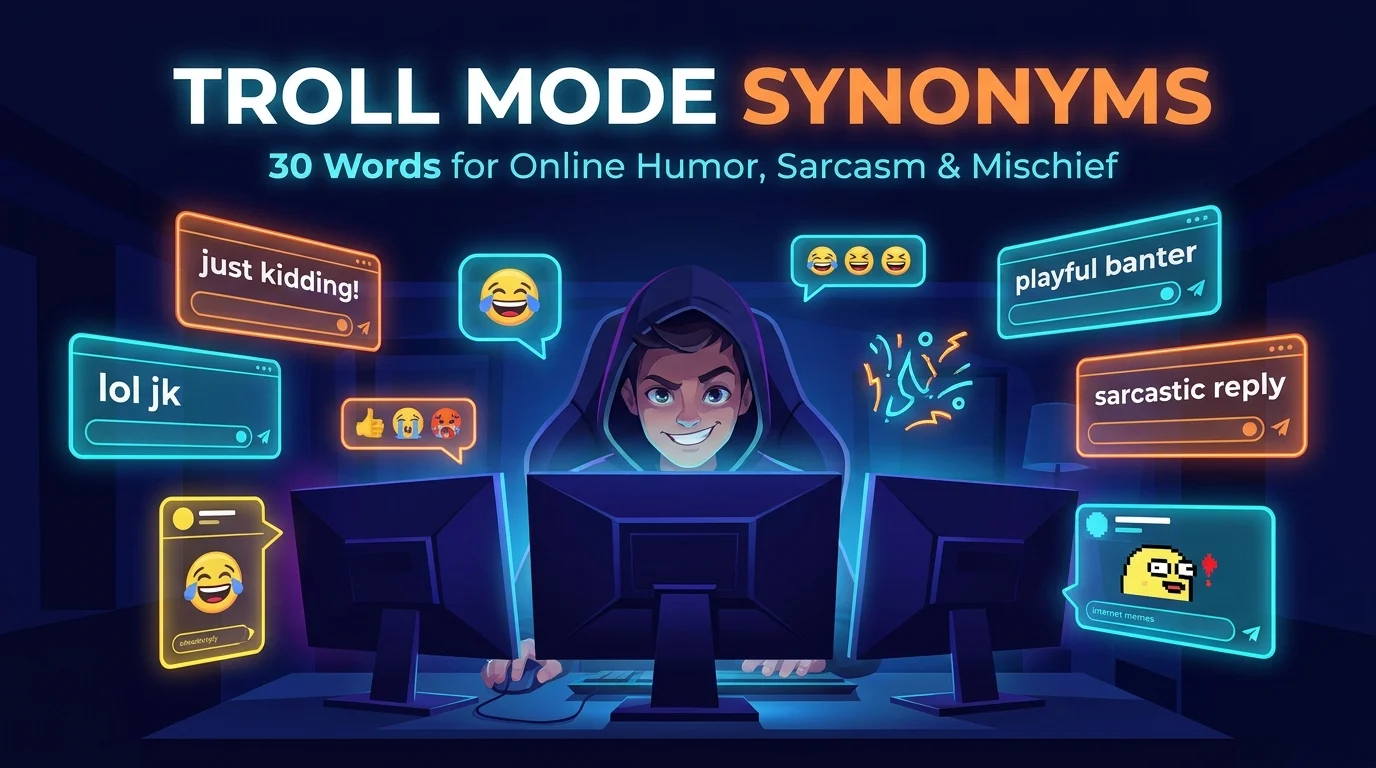
The phrase troll mode describes a playful, mischievous, or deliberately provocative way of behaving, especially online.
Someone in troll mode may make sarcastic comments, tease friends, post humorous content, or intentionally say something controversial to get a reaction.
The expression is popular in internet culture, gaming communities, social media conversations, and online discussions.
However, using the same phrase repeatedly can make your writing sound less interesting. Learning different troll mode synonyms can help you express humor, mischief, sarcasm, and provocative behavior more clearly.
If you are a student, ESL learner, writer, blogger, or content creator, understanding alternative expressions for troll mode can expand your vocabulary and improve your communication skills.
What Does Troll Mode Mean?
Troll mode refers to a behavior in which someone intentionally jokes, provokes, teases, or annoys others to create a reaction.
It is commonly associated with internet culture, where people use sarcastic comments, funny messages, memes, or controversial opinions to entertain themselves or get attention.
The phrase can have both playful and negative meanings.
- Playful meaning: Making harmless jokes and teasing friends.
- Negative meaning: Deliberately provoking, insulting, or upsetting people online.
Examples:
- He went into troll mode during the gaming session.
- She was in troll mode and kept making funny comments.
- The internet troll posted controversial messages to get attention.
30 Best Troll Mode Synonyms and Alternative Expressions
Here are 30 useful words and expressions related to troll mode. Some describe harmless humor, while others describe deliberate online provocation.
1. Mischievous
Meaning: Enjoying playful trouble or harmless tricks.
Example: He became mischievous during the online conversation.
Best usage: Playful teasing and harmless pranks.
2. Trolling
Meaning: Deliberately posting comments or messages to provoke reactions.
Example: He was trolling everyone in the gaming chat.
Best usage: Internet discussions and social media.
3. Provocative
Meaning: Intentionally causing strong reactions or responses.
Example: Her provocative comment started a heated discussion.
Best usage: Controversial opinions and online debates.
4. Teasing
Meaning: Making jokes about someone in a playful way.
Example: His teasing made everyone laugh.
Best usage: Friendly conversations and joking with friends.
5. Sarcastic
Meaning: Using words that mean the opposite of what you really want to say, often for humor or criticism.
Example: He made a sarcastic comment during the discussion.
Best usage: Humor, criticism, and witty conversations.
6. Playful
Meaning: Behaving in a fun, cheerful, and entertaining way.
Example: She had a playful attitude throughout the game.
Best usage: Friendly interactions and harmless jokes.
7. Naughty
Meaning: Behaving in a slightly improper or mischievous way.
Example: His naughty jokes made his friends laugh.
Best usage: Lighthearted mischief and informal conversations.
8. Cheeky
Meaning: Slightly rude or disrespectful in a funny or confident way.
Example: He gave a cheeky reply to his friend’s message.
Best usage: Informal humor and witty responses.
9. Snarky
Meaning: Making sharp, sarcastic, or slightly rude remarks.
Example: She responded with a snarky comment.
Best usage: Sarcastic online conversations.
10. Humorous
Meaning: Something that makes people laugh or smile.
Example: His humorous posts made the group more entertaining.
Best usage: Funny content and social media posts.
11. Prankish
Meaning: Enjoying tricks and practical jokes.
Example: His prankish behavior surprised everyone.
Best usage: Harmless tricks and playful mischief.
12. Antagonistic
Meaning: Acting in a way that creates conflict or opposition.
Example: His antagonistic remarks upset the other players.
Best usage: Negative arguments and hostile interactions.
13. Disruptive
Meaning: Interrupting normal activities or disturbing a conversation.
Example: His disruptive comments interrupted the online meeting.
Best usage: Unwanted interruptions and problematic behavior.
14. Satirical
Meaning: Using humor, irony, or exaggeration to criticize something.
Example: She shared a satirical post about internet culture.
Best usage: Social commentary and humorous criticism.
15. Irreverent
Meaning: Showing a lack of respect for something traditionally treated seriously.
Example: His irreverent humor made the conversation unusual.
Best usage: Bold jokes and unconventional humor.
16. Witty
Meaning: Showing quick thinking and clever humor.
Example: His witty reply made everyone laugh.
Best usage: Clever jokes and intelligent responses.
17. Sassy
Meaning: Confidently speaking in a bold, cheeky, or slightly disrespectful way.
Example: She gave him a sassy response.
Best usage: Playful arguments and confident replies.
18. Rude
Meaning: Showing disrespect through words or actions.
Example: His rude comments offended several people.
Best usage: Describing genuinely disrespectful behavior.
19. Annoying
Meaning: Causing irritation or frustration.
Example: His annoying messages continued throughout the game.
Best usage: Unwanted online behavior.
20. Contrarian
Meaning: Someone who regularly expresses opinions that oppose popular beliefs.
Example: He acted like a contrarian during the discussion.
Best usage: Disagreeing with popular opinions.
21. Sarcastic Humor
Meaning: Humor that uses irony or sharp remarks to make people laugh.
Example: His sarcastic humor entertained the entire group.
Best usage: Funny conversations and online comments.
22. Baiting
Meaning: Deliberately encouraging someone to react emotionally.
Example: The user was baiting others with controversial comments.
Best usage: Online arguments and provocative posts.
23. Rage Baiting
Meaning: Creating content specifically to make people angry and encourage reactions.
Example: The video looked like obvious rage baiting.
Best usage: Social media engagement and controversial content.
24. Bantering
Meaning: Exchanging playful and friendly jokes.
Example: The friends spent the evening bantering in the group chat.
Best usage: Friendly teasing and casual conversations.
25. Joking Around
Meaning: Saying or doing funny things without being serious.
Example: He was just joking around with his teammates.
Best usage: Casual conversations and friendly interactions.
26. Ribbing
Meaning: Teasing someone in a friendly and humorous way.
Example: His friends were ribbing him about his gaming skills.
Best usage: Friendly teasing among people who know each other.
27. Goofing Off
Meaning: Behaving silly or wasting time instead of taking something seriously.
Example: They were goofing off in the online classroom.
Best usage: Informal and humorous situations.
28. Stirring the Pot
Meaning: Intentionally creating disagreement or drama.
Example: He kept stirring the pot in the group conversation.
Best usage: Arguments, gossip, and online drama.
29. Provoking
Meaning: Deliberately encouraging someone to become angry or react.
Example: The player kept provoking his opponents.
Best usage: Arguments and competitive situations.
30. Fooling Around
Meaning: Acting silly, joking, or behaving without seriousness.
Example: They were fooling around in the gaming chat.
Best usage: Casual fun and harmless mischief.
Troll Mode Synonyms: Comparison Table
Different expressions related to troll mode have different meanings. Here is a quick comparison to help you choose the right one.
| Synonym | Main meaning | Best context |
|---|---|---|
| Mischievous | Playful troublemaking | Friendly jokes |
| Trolling | Provoking reactions | Internet culture |
| Provocative | Causing reactions | Online debates |
| Teasing | Making playful jokes | Friendships |
| Sarcastic | Ironic remarks | Conversations |
| Cheeky | Bold and playful | Informal replies |
| Snarky | Sharp remarks | Online comments |
| Witty | Clever humor | Funny responses |
| Prankish | Enjoying tricks | Pranks |
| Antagonistic | Creating conflict | Arguments |
| Satirical | Humorous criticism | Social commentary |
| Bantering | Friendly joking | Group chats |
| Baiting | Encouraging reactions | Online arguments |
| Rage baiting | Intentionally causing anger | Social media |
| Stirring the pot | Creating drama | Group discussions |
Different Types of Troll Mode Behavior
Troll mode does not always mean someone is trying to hurt others. It can describe several types of online and offline behavior.
1. Playful Troll Mode
This type involves harmless jokes, friendly teasing, and funny comments.
Examples:
- Making jokes with friends.
- Sharing funny memes.
- Giving playful replies.
- Teasing teammates during games.
Useful synonyms: Mischievous, playful, teasing, cheeky, and bantering.
2. Sarcastic Troll Mode
This behavior involves using irony, clever remarks, and sarcastic humor to entertain or criticize.
Examples:
- Giving witty replies.
- Making sarcastic comments.
- Using humorous exaggeration.
- Responding with clever jokes.
Useful synonyms: Sarcastic, snarky, witty, sassy, and satirical.
3. Provocative Troll Mode
This type involves intentionally saying things to get reactions or start disagreements.
Examples:
- Posting controversial opinions.
- Challenging popular beliefs.
- Making provocative comments.
- Starting unnecessary debates.
Useful synonyms: Provocative, trolling, baiting, contrarian, and provoking.
4. Annoying Troll Mode
This behavior involves repeatedly interrupting conversations or irritating others.
Examples:
- Sending unwanted messages.
- Repeating irritating jokes.
- Interrupting online discussions.
- Deliberately disturbing gaming sessions.
Useful synonyms: Disruptive, annoying, antagonistic, and rude.
5. Social Media Troll Mode
This type is commonly seen on social media platforms and online communities.
Examples:
- Posting rage-bait content.
- Making sarcastic replies.
- Starting online arguments.
- Sharing controversial memes.
Useful synonyms: Trolling, rage-baiting, baiting, stirring the pot, and provocative.
How to Choose the Right Troll Mode Synonym
Choosing the right alternative depends on the person’s intention and the situation.
Here are some useful categories.
For harmless jokes and playful behavior
Use:
- Mischievous
- Playful
- Cheeky
- Teasing
- Prankish
Example: He was feeling mischievous and started teasing his friends.
For sarcasm and clever humor
Use:
- Sarcastic
- Snarky
- Witty
- Sassy
- Satirical
Example: She gave a witty response that made everyone laugh.
For deliberately provoking people
Use:
- Trolling
- Provocative
- Baiting
- Provoking
- Rage-baiting
Example: The account was posting provocative comments to attract attention.
For creating drama and arguments
Use:
- Antagonistic
- Contrarian
- Stirring the pot
- Disruptive
- Rude
Example: He was stirring the pot by bringing up controversial topics.
For casual internet conversations
Use:
- Bantering
- Joking around
- Goofing off
- Fooling around
- Sarcastic humor
Example: We were just bantering in the group chat.
Troll Mode vs. Trolling: What Is the Difference?
Although these expressions are closely related, they are not exactly the same.
Troll mode describes a temporary attitude or behavior in which someone acts mischievously, sarcastically, or provocatively.
Trolling refers more specifically to the act of deliberately provoking people, particularly through online comments or posts.
Examples:
- Troll mode: He went into troll mode and started making silly jokes.
- Trolling: He was trolling strangers by posting deliberately offensive comments.
Troll mode can be playful and harmless, while trolling often has a more negative meaning.
How to Use Troll Mode Synonyms in Sentences
Here are 10 additional examples showing how these expressions work in everyday English.
- He became mischievous during the online gaming session.
- Her sarcastic comments made the conversation entertaining.
- The player kept provoking his opponents.
- They enjoyed bantering with each other in the group chat.
- His cheeky reply surprised everyone.
- The creator posted satirical content about internet trends.
- Stop stirring the pot and let everyone enjoy the conversation.
- She made a witty comment that changed the mood.
- The account was clearly rage-baiting its followers.
- We were just joking around and having fun.
Frequently Asked Questions About Troll Mode Synonyms
1. What is another word for troll mode?
Some alternatives include mischievous, playful, sarcastic, provocative, cheeky, trolling, and bantering. The best choice depends on whether the behavior is humorous or intentionally offensive.
2. What is a slang word for trolling?
Common informal expressions include messing around, joking around, baiting, stirring the pot, and rage-baiting.
3. What does going into troll mode mean?
Going into troll mode means behaving in a deliberately funny, mischievous, sarcastic, or provocative way to get reactions from others.
4. What is the opposite of troll mode?
Depending on the context, possible opposites include being sincere, respectful, serious, considerate, genuine, and straightforward.
5. Is troll mode positive or negative?
It can be either. Friendly teasing and harmless jokes can be positive. However, deliberately upsetting, insulting, or harassing people is negative behavior.
6. What is a fancy word for troll mode?
Provocative behavior, mischievous conduct, irreverence, and playful antagonism are more sophisticated expressions related to troll mode.
7. What is troll mode in gaming?
In gaming, troll mode usually describes a player who makes jokes, performs unexpected actions, teases teammates, or deliberately disrupts gameplay to get reactions.
Conclusion
Learning different troll mode synonyms helps you describe online humor, playful mischief, sarcasm, and provocative behavior more accurately.
Words such as mischievous, cheeky, sarcastic, witty, provocative, and bantering offer different ways to express the meaning of troll mode.
Remember that context matters. A person making harmless jokes with friends is different from someone deliberately provoking or insulting strangers online.
Choose your words according to the situation and intended meaning.
If you are writing a blog post, creating social media content, participating in online discussions, or improving your English vocabulary, these 30 alternatives can help make your communication clearer and more expressive.

I am Derek Thomas, a passionate word enthusiast and writer. I enjoy exploring synonyms, expanding vocabulary, and helping readers find clear, accurate, and meaningful words for better writing.