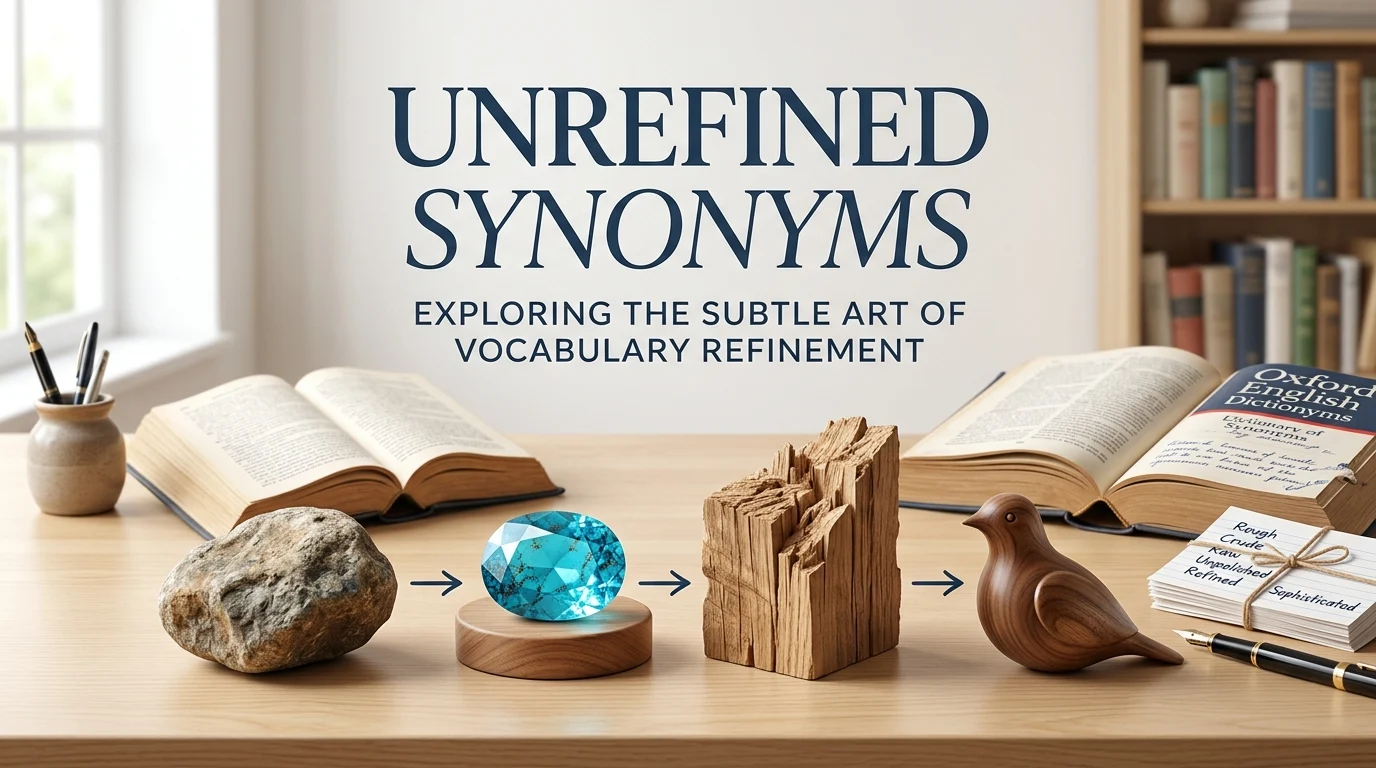
Finding the right unrefined synonyms can make your writing more precise, natural, and expressive. The word unrefined can describe many different things, including a person’s manners, a material that has not been processed, an idea that needs improvement, or something that feels simple and unsophisticated.
However, not every synonym for unrefined works in every situation. For example, raw is useful when talking about materials or natural products, while uncultured may describe a person who lacks social or cultural sophistication. Similarly, rough can describe both physical texture and something that is not yet polished or developed.
This guide provides 30 useful synonyms for unrefined, with simple meanings, example sentences, and practical usage notes. It is designed for students, ESL learners, writers, and content creators who want to choose the most accurate word for a particular context.
What Does “Unrefined” Mean?
Unrefined generally means not processed, polished, improved, developed, or made sophisticated.
The exact meaning depends on context.
For example:
- Unrefined oil has not been processed to remove certain impurities.
- An unrefined diamond has not been cut or polished.
- An unrefined idea still needs development.
- Unrefined manners may seem rough or lacking in social polish.
- An unrefined style may be simple, rough, or not carefully developed.
So, the best synonym depends on what you are describing.
30 Unrefined Synonyms
1. Raw
Meaning: Natural or untreated; not processed or developed.
Example:
The factory uses raw materials to produce the finished goods.
Best usage context:
Use raw for natural materials, food, data, emotions, talent, or ideas that have not yet been processed or developed.
2. Rough
Meaning: Not smooth, polished, finished, or carefully developed.
Example:
The designer showed us a rough version of the new logo.
Best usage context:
Useful for physical surfaces, drafts, designs, plans, and unfinished work.
3. Crude
Meaning: Simple, rough, or lacking refinement.
Example:
The machine was built using crude tools and basic materials.
Best usage context:
Use crude for something basic, poorly developed, or lacking sophistication. It can sometimes sound critical.
4. Unpolished
Meaning: Not improved, perfected, or made more sophisticated.
Example:
His first presentation was informative but somewhat unpolished.
Best usage context:
Excellent for writing, speaking, performances, skills, manners, and creative work.
5. Untreated
Meaning: Not processed, changed, or given special treatment.
Example:
The furniture was made from untreated wood.
Best usage context:
Common when discussing materials, surfaces, chemicals, and products.
6. Unprocessed
Meaning: Not changed or prepared through a particular process.
Example:
The recipe calls for unprocessed ingredients.
Best usage context:
Best for food, materials, information, data, and natural resources.
7. Natural
Meaning: Existing in its original or normal state without much artificial change.
Example:
The artist prefers to work with natural materials.
Best usage context:
Useful when unrefined means original, untreated, or minimally changed. Unlike some synonyms, natural is often neutral or positive.
8. Unsophisticated
Meaning: Lacking experience, complexity, or social refinement.
Example:
The young entrepreneur had an unsophisticated understanding of international markets.
Best usage context:
Use it for people, ideas, systems, tastes, or approaches that lack complexity or experience.
9. Uncultured
Meaning: Lacking knowledge or appreciation of culture, art, or social customs.
Example:
Calling someone uncultured simply because they enjoy different music can be unfair.
Best usage context:
Usually describes people or behavior. Because it can sound insulting, use it carefully.
10. Unpolished
Meaning: Not yet perfected or made smooth and professional.
Example:
The writer submitted an unpolished draft for review.
Best usage context:
Particularly useful for writing, speeches, performances, skills, and creative projects.
11. Inexperienced
Meaning: Having little practical experience or knowledge.
Example:
The inexperienced worker needed additional training.
Best usage context:
Use this when unrefined refers to undeveloped skills or limited practical experience.
12. Naive
Meaning: Lacking experience or a realistic understanding of something.
Example:
It was naive to assume that the project would be completed in one day.
Best usage context:
Useful for people, opinions, expectations, and ideas that show limited experience.
13. Unsophisticated
Meaning: Simple and lacking complexity or refinement.
Example:
The website uses an unsophisticated design with very few features.
Best usage context:
Good for technology, designs, systems, ideas, and people.
14. Basic
Meaning: Simple and without advanced features or qualities.
Example:
The course provides a basic introduction to photography.
Best usage context:
Best when you want a neutral and easy-to-understand alternative to unrefined.
15. Primitive
Meaning: Very simple or undeveloped compared with something more advanced.
Example:
The early settlers used primitive tools to build their homes.
Best usage context:
Useful for technology, tools, systems, and historical contexts. Avoid using it carelessly about people because it can sound derogatory.
16. Unfinished
Meaning: Not completed or fully developed.
Example:
The author presented an unfinished version of the novel.
Best usage context:
Use it for projects, artwork, writing, buildings, plans, and other incomplete things.
17. Undeveloped
Meaning: Not fully developed, improved, or advanced.
Example:
The concept is interesting, but the proposal is still undeveloped.
Best usage context:
Excellent for ideas, skills, land, businesses, plans, and abilities.
18. Uncultivated
Meaning: Not developed, improved, or prepared for a particular purpose.
Example:
Large areas of uncultivated land surrounded the village.
Best usage context:
Commonly used for land, fields, and natural areas. It can also describe skills or knowledge in certain contexts.
19. Untrained
Meaning: Not taught or prepared to perform a particular skill.
Example:
The untrained artist showed impressive natural talent.
Best usage context:
Best for people, workers, performers, animals, and skills.
20. Unskilled
Meaning: Lacking training or specialized ability.
Example:
The job can be performed by unskilled workers after basic instruction.
Best usage context:
Useful for labor, workers, tasks, and abilities.
21. Coarse
Meaning: Rough, harsh, or lacking delicacy and refinement.
Example:
The fabric had a coarse texture.
Best usage context:
Often used for physical textures, language, behavior, or manners.
22. Harsh
Meaning: Rough, severe, or unpleasant rather than gentle or refined.
Example:
The critic’s harsh comments upset the young writer.
Best usage context:
Useful for sounds, words, criticism, environments, behavior, and conditions.
23. Rudimentary
Meaning: Basic and not fully developed.
Example:
The students had only a rudimentary understanding of programming.
Best usage context:
A strong choice for knowledge, skills, systems, methods, and technology.
24. Unschooled
Meaning: Having little formal education or training.
Example:
Although he was unschooled, he developed excellent practical skills.
Best usage context:
Primarily used when discussing education, learning, or formal training.
25. Untutored
Meaning: Not formally trained or taught.
Example:
Her untutored musical talent surprised the judges.
Best usage context:
Useful for artistic, intellectual, or creative abilities developed without formal instruction.
26. Unseasoned
Meaning: Lacking experience or practice.
Example:
The unseasoned manager struggled with the unexpected crisis.
Best usage context:
Usually describes people who are new to a role or situation.
27. Unrehearsed
Meaning: Not practiced or prepared beforehand.
Example:
His unrehearsed speech sounded surprisingly natural.
Best usage context:
Best for speeches, performances, conversations, presentations, and actions.
28. Imperfect
Meaning: Having faults or not fully developed or completed.
Example:
The first version was imperfect but contained several useful ideas.
Best usage context:
A gentle alternative when you want to acknowledge flaws without sounding overly negative.
29. Plain
Meaning: Simple and without decoration, complexity, or luxury.
Example:
She chose a plain wooden table for the dining room.
Best usage context:
Useful for appearance, clothing, design, language, and lifestyle. It does not always mean unrefined.
30. Unsmooth
Meaning: Not smooth, polished, or flowing.
Example:
The first draft contained several unsmooth transitions between paragraphs.
Best usage context:
Useful when discussing writing, physical surfaces, processes, or transitions that need improvement.
Quick Comparison: Unrefined Synonyms
| Synonym | Main Meaning | Common Context | Tone |
|---|---|---|---|
| Raw | Untreated or natural | Materials, food, data | Neutral |
| Rough | Not smooth or finished | Work, surfaces, drafts | Neutral |
| Crude | Basic and lacking refinement | Tools, methods, behavior | Often negative |
| Unpolished | Not perfected | Writing, skills, performance | Neutral |
| Untreated | Not processed | Materials, products | Neutral |
| Unprocessed | Not processed or changed | Food, data, materials | Neutral |
| Natural | In original state | Materials, products, style | Often positive |
| Unsophisticated | Lacking complexity | People, ideas, systems | Neutral to negative |
| Uncultured | Lacking cultural knowledge | People, behavior | Negative |
| Inexperienced | Lacking experience | People, workers | Neutral |
| Naive | Lacking practical understanding | People, beliefs | Neutral to negative |
| Basic | Simple | Skills, systems, designs | Neutral |
| Primitive | Very basic or undeveloped | Technology, tools | Can be negative |
| Unfinished | Not completed | Projects, art, writing | Neutral |
| Undeveloped | Not fully developed | Ideas, skills, places | Neutral |
| Untrained | Lacking training | People, skills | Neutral |
| Unskilled | Lacking specialized ability | Workers, labor | Neutral |
| Coarse | Rough or lacking delicacy | Texture, manners | Negative |
| Rudimentary | Basic or early-stage | Knowledge, systems | Neutral |
| Imperfect | Not flawless | Work, products, ideas | Mild/neutral |
Unrefined Synonyms by Context
Choosing a synonym becomes easier when you first identify what unrefined means in your sentence.
When You Mean “Not Processed”
Use:
- Raw
- Untreated
- Unprocessed
- Natural
Example:
“The company sells unprocessed agricultural products.”
Here, unpolished or unsophisticated would not be appropriate.
When You Mean “Not Finished”
Use:
- Rough
- Unpolished
- Unfinished
- Undeveloped
- Imperfect
Example:
“This is only a rough draft of the proposal.”
When You Mean “Not Sophisticated”
Use:
- Unsophisticated
- Basic
- Crude
- Rudimentary
- Primitive
Example:
“The village had a rudimentary communication system.”
When You Mean “Lacking Experience”
Use:
- Inexperienced
- Naive
- Unseasoned
- Untrained
- Untutored
Example:
“The inexperienced employee needed guidance.”
When You Mean “Lacking Social or Cultural Refinement”
Use:
- Uncultured
- Coarse
- Unsophisticated
- Unpolished
Example:
“His unpolished manners improved after several months of practice.”
How to Choose the Right Synonym for “Unrefined”
The right synonym depends on both meaning and tone.
For a Neutral Tone
Choose words such as:
- Raw
- Basic
- Natural
- Untreated
- Unprocessed
- Unfinished
- Undeveloped
These words describe a condition without necessarily criticizing it.
For a Professional or Academic Tone
Consider:
- Rudimentary
- Unprocessed
- Undeveloped
- Inexperienced
- Unpolished
- Untutored
These words are useful in essays, reports, educational writing, and professional communication.
For Creative Writing
Try:
- Raw
- Rough
- Crude
- Unpolished
- Untutored
- Natural
These words can help describe characters, artistic work, emotions, or creative processes.
When Describing a Person
Be careful with words such as:
- Uncultured
- Naive
- Unsophisticated
- Coarse
- Unskilled
They can carry negative or judgmental meanings depending on the sentence.
If you simply mean that someone is new to something, inexperienced or untrained is usually more precise.
Unrefined vs. Raw
Unrefined and raw are closely related, but they are not always interchangeable.
Raw usually emphasizes that something is in a natural or untreated state.
Unrefined often emphasizes that something has not gone through a process that makes it purer, smoother, or more developed.
For example:
- Raw materials = materials in their natural or basic state.
- Unrefined oil = oil that has not undergone refining.
- Raw talent = natural ability that has not yet been developed.
Unrefined vs. Crude
Crude often suggests that something is poorly made, basic, rough, or lacking sophistication.
Unrefined can be more neutral.
Compare:
- “The material is unrefined.”
- “The technique is crude.”
The first statement can simply describe a stage of processing. The second may suggest that the technique is poorly developed.
Unrefined vs. Unsophisticated
These words overlap when describing people, ideas, styles, or systems.
Unrefined often means lacking polish or development.
Unsophisticated usually means lacking complexity, experience, or sophistication.
For example:
“The proposal is unrefined.”
This suggests that the proposal needs improvement.
“The proposal is unsophisticated.”
This suggests that the proposal may lack complexity or a deeper understanding of the subject.
Unrefined vs. Unpolished
These two words are especially similar when describing creative work.
Unpolished usually means something has potential but needs improvement.
For example:
“Her writing is unpolished but promising.”
This sounds constructive.
Unrefined can also work, but it may have a broader meaning depending on the context.
Why Choosing the Right Synonym Matters
Using the right synonym can make your writing clearer and more accurate.
Consider the sentence:
“The student has an unrefined understanding of economics.”
Several alternatives are possible, but they communicate slightly different ideas:
- Basic understanding → the student knows the fundamentals.
- Rudimentary understanding → the knowledge is at an early or limited stage.
- Unsophisticated understanding → the understanding lacks complexity.
- Incomplete understanding → some important information is missing.
- Naive understanding → the understanding may show limited experience or unrealistic assumptions.
These differences are small, but they matter when you want precise writing.
Frequently Asked Questions About Unrefined Synonyms
What is the closest synonym for “unrefined”?
The closest synonym depends on context. Raw, rough, unpolished, crude, untreated, unprocessed, and unsophisticated are common alternatives.
What is a simple synonym for unrefined?
Raw or rough can be simple alternatives, depending on the sentence.
For example:
- unrefined materials → raw materials
- unrefined work → rough or unpolished work
What is the opposite of unrefined?
Common opposites include:
- Refined
- Polished
- Sophisticated
- Processed
- Developed
- Cultivated
- Finished
- Elegant
The best opposite depends on the meaning of unrefined in context.
Is “raw” the same as “unrefined”?
Not always. Raw usually emphasizes something natural or untreated, while unrefined can also describe something that lacks polish, sophistication, or development.
Can “unrefined” describe a person?
Yes, but the meaning changes with context. It can describe someone whose manners, behavior, taste, or social style seem lacking in polish. Because this can sound judgmental, more specific words such as inexperienced or untrained may be better when those are what you actually mean.
What is a synonym for unrefined writing?
Depending on the intended meaning, you could use unpolished, rough, undeveloped, basic, or unfinished.
Final Takeaway
The word unrefined has several meanings, so there is no single synonym that works perfectly in every situation. If you are describing something untreated, raw, unprocessed, or untreated may be the best choice. For unfinished work, rough, unpolished, or undeveloped can be more precise.
When describing limited experience or knowledge, consider inexperienced, naive, or rudimentary. If you mean a lack of sophistication, unsophisticated, crude, or unpolished may fit better.
The key is to focus on the exact idea you want to communicate. Choosing a precise synonym not only improves vocabulary but also makes your writing clearer, more natural, and more effective.
For students, ESL learners, writers, and content creators, understanding these subtle differences is an important step toward stronger and more confident English.

I am Scarlett Jane, a passionate language writer who loves exploring synonyms and word meanings. I create helpful content that makes vocabulary easier, clearer, and more enjoyable for everyone.