Feeling sad is a normal part of life, but using the same word repeatedly can make your writing feel flat.
If you are a student writing an essay, an ESL learner building vocabulary, or a writer looking for more precise emotional language, knowing different synonyms for sad can help you express exactly how someone feels.
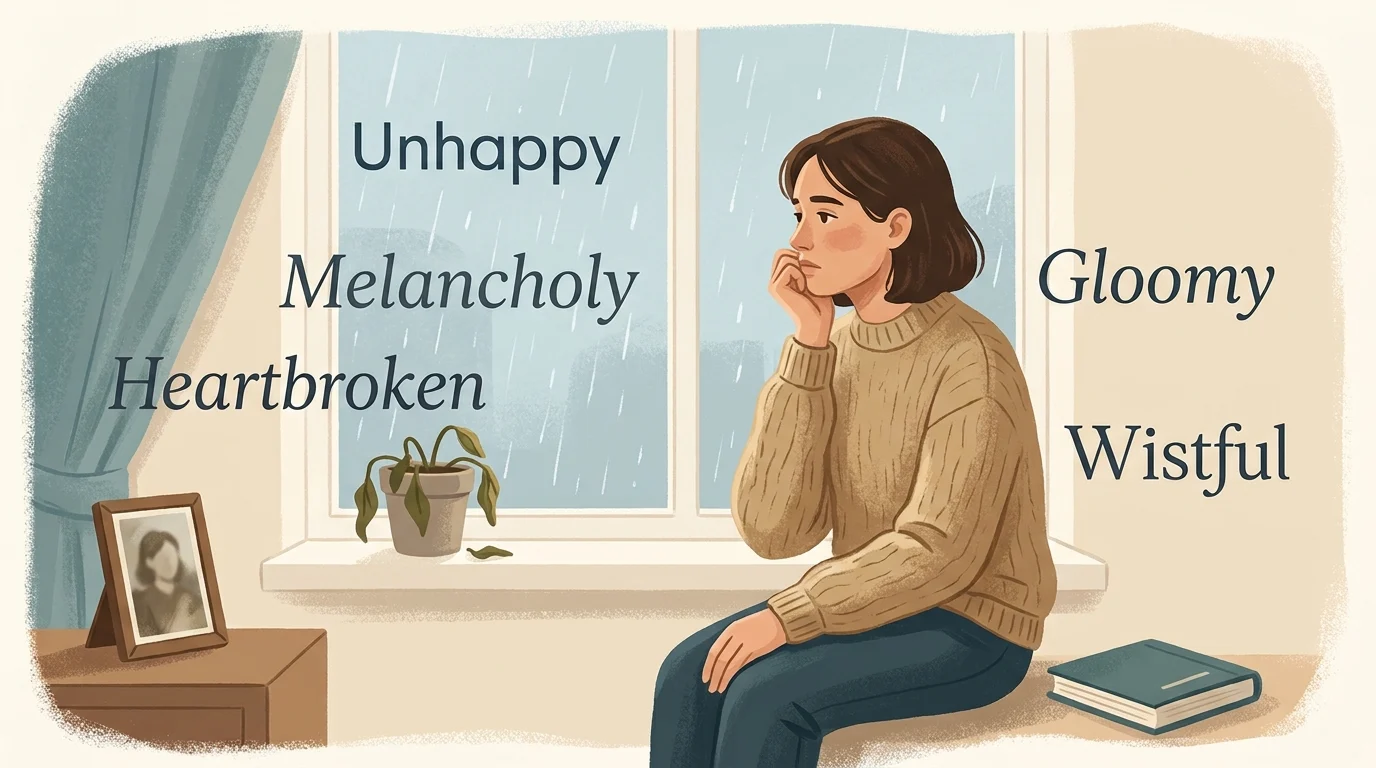
The word sad can describe many emotions, from mild disappointment to deep grief. However, not every synonym means exactly the same thing. Words such as unhappy, gloomy, heartbroken, and melancholy carry different levels of emotional intensity and different tones.
This guide explains 30 useful synonyms for sad in simple English. Each word includes an easy definition, an example sentence, and guidance on when it works best. By the end, you will be able to choose a word that matches the exact feeling or situation you want to describe.
What Does “Sad” Mean?
Sad is an adjective that describes a feeling of unhappiness, sorrow, disappointment, or emotional pain.
In simple English, if someone is sad, they are not happy because something unpleasant has happened or because they are experiencing emotional pain.
For example:
She felt sad when her best friend moved away.
The word sad is common and natural in everyday English. It works in almost any situation, but more specific words can make your writing clearer and more expressive.
For example:
- Sad: He was sad after losing the competition.
- Disappointed: He was disappointed after losing the competition.
- Heartbroken: He was heartbroken after losing someone he loved.
- Miserable: He felt miserable throughout the difficult week.
The best synonym depends on the cause, strength, and tone of the emotion.
30 Synonyms for Sad
1. Unhappy
Meaning: Feeling that you are not happy or satisfied.
Example:
She was unhappy with the way the situation had turned out.
Best usage: Everyday conversations and general writing.
Tone: Neutral and mild.
2. Sorrowful
Meaning: Feeling or showing deep sadness.
Example:
He gave a sorrowful smile as he remembered his childhood home.
Best usage: Emotional, literary, or serious writing.
Tone: Formal and emotional.
3. Miserable
Meaning: Extremely unhappy or uncomfortable.
Example:
I felt miserable after spending the entire weekend alone.
Best usage: Strong personal unhappiness or emotional discomfort.
Tone: Strong and informal to neutral.
4. Gloomy
Meaning: Feeling sad, negative, or without much hope.
Example:
She was in a gloomy mood after receiving the bad news.
Best usage: Describing someone’s mood, an atmosphere, or a situation.
Tone: Mildly negative.
5. Depressed
Meaning: Feeling very unhappy and without much hope.
Example:
He became depressed after several difficult events happened in his life.
Best usage: Serious emotional situations. In everyday writing, use this word carefully because it can also refer to the medical condition of depression.
Tone: Serious.
6. Melancholy
Meaning: A quiet, thoughtful feeling of sadness.
Example:
The old song filled her with a sense of melancholy.
Best usage: Literature, reflective writing, music, art, and thoughtful descriptions.
Tone: Poetic and gentle.
7. Heartbroken
Meaning: Extremely sad because of loss, especially the loss of someone you love.
Example:
She was heartbroken when her relationship ended.
Best usage: Romantic loss, bereavement, or profound emotional pain.
Tone: Very emotional.
8. Downcast
Meaning: Looking or feeling sad and discouraged.
Example:
The students looked downcast after hearing that the trip was canceled.
Best usage: Describing someone’s appearance or mood.
Tone: Neutral to formal.
9. Dejected
Meaning: Sad and disappointed, especially after a failure or setback.
Example:
He felt dejected after failing the final interview.
Best usage: Failure, rejection, disappointment, or defeat.
Tone: Formal.
10. Disheartened
Meaning: Having lost confidence or hope.
Example:
She felt disheartened after receiving several negative responses to her applications.
Best usage: Situations involving failure, rejection, or discouragement.
Tone: Formal and thoughtful.
11. Disappointed
Meaning: Sad because something did not happen as expected.
Example:
I was disappointed when the event was canceled.
Best usage: Expectations that were not met.
Tone: Mild and everyday.
12. Forlorn
Meaning: Very sad, lonely, or abandoned.
Example:
The child gave a forlorn look when his parents left.
Best usage: Literary descriptions of loneliness or abandonment.
Tone: Poetic and somewhat formal.
13. Woeful
Meaning: Very sad or miserable.
Example:
He told us the woeful story of his difficult journey.
Best usage: Dramatic or literary writing.
Tone: Strong and literary.
14. Mournful
Meaning: Showing deep sadness, especially because of a loss or death.
Example:
A mournful silence filled the room after the announcement.
Best usage: Grief, death, loss, music, and solemn situations.
Tone: Serious and emotional.
15. Tearful
Meaning: Likely to cry or showing signs of crying.
Example:
She gave her friend a tearful goodbye.
Best usage: Moments involving crying or emotional farewells.
Tone: Emotional but natural.
16. Weepy
Meaning: Crying easily or feeling like crying.
Example:
The emotional movie left him feeling weepy.
Best usage: Informal descriptions of someone close to tears.
Tone: Informal.
17. Somber
Meaning: Serious, quiet, and lacking happiness.
Example:
The classroom became somber after the teacher shared the news.
Best usage: Serious events, moods, ceremonies, and atmospheres.
Tone: Formal and serious.
18. Heavy-hearted
Meaning: Feeling very sad or worried.
Example:
She left the house heavy hearted after saying goodbye to her family.
Best usage: Emotional writing, farewells, and difficult decisions.
Tone: Warm and literary.
19. Blue
Meaning: Feeling sad or unhappy.
Example:
I’ve been feeling a little blue since my vacation ended.
Best usage: Casual conversations.
Tone: Informal and gentle.
20. Low
Meaning: Feeling unhappy, discouraged, or lacking energy.
Example:
He was feeling low after a stressful week at work.
Best usage: Everyday British and international English.
Tone: Informal and mild.
21. Dismal
Meaning: Very unhappy, depressing, or without hope.
Example:
The team had a dismal season and lost most of its games.
Best usage: Describing situations, conditions, results, or outlooks rather than someone’s personal emotion.
Tone: Negative and somewhat formal.
22. Morose
Meaning: Unhappy and unwilling to talk or interact with others.
Example:
He became morose after hearing the disappointing news.
Best usage: Describing someone who is persistently gloomy or withdrawn.
Tone: Formal.
23. Pensive
Meaning: Quietly thoughtful, often because of something sad or worrying.
Example:
She sat by the window with a pensive expression.
Best usage: Reflective moods rather than intense sadness.
Tone: Gentle and literary.
24. Regretful
Meaning: Feeling sorry about something that happened or something you did.
Example:
He felt regretful about the harsh words he had spoken.
Best usage: Sadness connected specifically to regret.
Tone: Neutral and reflective.
25. Wistful
Meaning: Slightly sad because you are thinking about something you want or miss.
Example:
She gave a wistful smile when she remembered her school days.
Best usage: Nostalgia, memories, lost opportunities, or things that cannot easily be recovered.
Tone: Gentle and poetic.
26. Anguished
Meaning: Experiencing severe emotional pain.
Example:
He made an anguished cry after hearing the tragic news.
Best usage: Extreme emotional suffering.
Tone: Very strong and dramatic.
27. Distressed
Meaning: Very worried, upset, or emotionally troubled.
Example:
The passengers were distressed by the sudden announcement.
Best usage: Serious worry, shock, or emotional difficulty.
Tone: Formal and serious.
28. Despondent
Meaning: Feeling that there is little hope and that things will not improve.
Example:
After months of setbacks, she became despondent.
Best usage: Long-lasting discouragement and loss of hope.
Tone: Formal and serious.
29. Grieving
Meaning: Feeling deep sadness because someone or something important has been lost.
Example:
The family was grieving after the death of their grandfather.
Best usage: Death, major loss, and bereavement.
Tone: Serious and compassionate.
30. Aching
Meaning: Experiencing a deep emotional pain or longing.
Example:
He felt an aching sadness whenever he thought about his old home.
Best usage: Emotional pain, longing, separation, and literary writing.
Tone: Poetic and expressive.
Quick Comparison: Which Synonym for Sad Should You Use?
| Synonym | Strength | Best for | Tone |
|---|---|---|---|
| Unhappy | Mild | General unhappiness | Neutral |
| Disappointed | Mild | Unmet expectations | Everyday |
| Blue | Mild | Casual sadness | Informal |
| Low | Mild | Temporary sadness | Informal |
| Gloomy | Mild–medium | Mood or atmosphere | Neutral |
| Pensive | Mild | Thoughtful sadness | Literary |
| Wistful | Mild–medium | Memories and longing | Poetic |
| Melancholy | Medium | Quiet, reflective sadness | Literary |
| Downcast | Medium | Sad appearance | Neutral |
| Dejected | Medium | Failure or defeat | Formal |
| Disheartened | Medium | Loss of confidence | Formal |
| Morose | Medium | Withdrawn sadness | Formal |
| Sorrowful | Medium–strong | Deep sadness | Literary |
| Mournful | Strong | Grief and loss | Serious |
| Miserable | Strong | Extreme unhappiness | Everyday |
| Heartbroken | Strong | Emotional loss | Emotional |
| Anguished | Very strong | Severe emotional pain | Dramatic |
| Despondent | Very strong | Loss of hope | Formal |
| Grieving | Very strong | Bereavement | Serious |
| Forlorn | Strong | Loneliness or abandonment | Literary |
How to Choose the Right Synonym for Sad
Choosing a synonym is not simply about finding another word with the same dictionary definition. The reason for the sadness and the intensity of the feeling matter.
For Mild Sadness
Use:
- unhappy
- blue
- low
- disappointed
- gloomy
These words work well when the person is sad but not experiencing intense emotional pain.
Example:
I was disappointed when my plans changed.
This sounds more precise than simply saying:
I was sad when my plans changed.
For Deep Emotional Pain
Use:
- sorrowful
- heartbroken
- mournful
- anguished
- grieving
These words are appropriate when the sadness is serious or connected to major loss.
Example:
She was heartbroken after losing her closest friend.
The word heartbroken communicates much stronger emotion than unhappy.
For Sadness Caused by Failure
Use:
- disappointed
- dejected
- disheartened
- despondent
These words work particularly well when someone has tried to achieve something but experienced failure or rejection.
Example:
After being rejected from the program, he felt dejected.
For Loneliness or Abandonment
Use:
- forlorn
- lonely
- miserable
- heavy-hearted
Forlorn is especially useful in descriptive and literary writing.
Example:
The abandoned house had a forlorn appearance.
For Nostalgia and Memories
Use:
- wistful
- melancholy
- pensive
- aching
These words are useful when sadness is mixed with memories, longing, or reflection.
Example:
She felt wistful as she looked through her old photographs.
Here, wistful suggests that she misses something from the past rather than simply feeling unhappy.
For Serious or Formal Writing
Consider:
- sorrowful
- mournful
- somber
- distressed
- despondent
- disheartened
- morose
These words can work well in essays, reports, literary analysis, and formal descriptions.
However, always consider the context. A sophisticated word is not automatically a better word. The best synonym is the one that expresses the intended meaning accurately.
Sad vs. Its Synonyms: Important Differences
Although synonyms share similar meanings, they are rarely interchangeable in every sentence.
Sad vs. Disappointed
Sad is broad. Disappointed specifically suggests that an expectation was not met.
I am sad about the situation.
I am disappointed that the event was canceled.
Sad vs. Heartbroken
Heartbroken is much stronger than sad and usually describes severe emotional pain.
She was sad after the argument.
She was heartbroken after losing her partner.
Sad vs. Melancholy
Melancholy often describes a quiet, reflective type of sadness.
The rainy afternoon made him feel melancholy.
It can sound more literary than sad.
Sad vs. Gloomy
Gloomy can describe a person’s mood, a place, an atmosphere, or even an outlook about the future.
He was gloomy all morning.
The weather was gloomy.
Sad vs. Despondent
Despondent suggests that someone has lost hope, not merely that they are unhappy.
She was sad after the mistake.
She became despondent after repeated failures.
Common Mistakes When Using Synonyms for Sad
1. Using a Strong Word for a Mild Emotion
Avoid using heartbroken when someone is simply disappointed.
❌ I was heartbroken because the restaurant was closed.
✅ I was disappointed because the restaurant was closed.
The second sentence sounds much more natural.
2. Treating Every Synonym as Exactly the Same
Words with similar meanings often have different emotional shades.
For example:
- wistful = slightly sad and longing
- mournful = sad because of loss
- dejected = sad because of failure
- despondent = sad because of lost hope
- heartbroken = deeply emotionally hurt
Learning these differences will make your English more precise.
3. Using Formal Words in Casual Conversations
Words such as despondent, morose, and forlorn are perfectly valid English, but they may sound unusual in casual conversation.
Instead of:
I’m feeling rather despondent today.
A casual speaker might say:
I’m feeling pretty down today.
Match the vocabulary to your audience and situation.
Synonyms for Sad in Different Writing Situations
For Essays
Good choices include:
- sorrowful
- disappointed
- disheartened
- somber
- distressed
- melancholy
For Creative Writing
Consider:
- wistful
- forlorn
- mournful
- heavy-hearted
- aching
- melancholy
For Everyday Conversation
Use:
- unhappy
- sad
- disappointed
- down
- low
- blue
For Emotional Stories
Strong choices include:
- heartbroken
- anguished
- grieving
- sorrowful
- miserable
For Professional or Formal Writing
Consider:
- distressed
- disappointed
- disheartened
- somber
- sorrowful
How to Improve Your Vocabulary Beyond “Sad”
Instead of immediately replacing sad with a complicated word, first ask yourself what kind of sadness you want to describe.
Is the person:
- disappointed because something went wrong?
- heartbroken because of a major emotional loss?
- melancholy because they are quietly reflecting?
- wistful because they miss the past?
- dejected because they failed?
- despondent because they have lost hope?
- grieving because someone died?
- miserable because they are extremely unhappy?
This approach helps you choose words based on meaning rather than appearance.
For ESL learners, this is especially useful because English vocabulary often contains many words that appear to be interchangeable but have subtle differences.
Frequently Asked Questions About Synonyms for Sad
What is the best synonym for sad?
There is no single best synonym. Unhappy is a useful general alternative, while words such as disappointed, heartbroken, melancholy, and grieving are better when you want to communicate a specific type of sadness.
What is a stronger word for sad?
Depending on the situation, heartbroken, miserable, anguished, despondent, or grieving can express stronger forms of sadness.
What is a softer word for sad?
Words such as wistful, pensive, melancholy, blue, and low can describe softer or less intense forms of sadness.
What is a formal word for sad?
Depending on the context, sorrowful, mournful, somber, morose, despondent, and disheartened can work in more formal writing.
What is a poetic synonym for sad?
Melancholy, wistful, forlorn, mournful, and heavy-hearted are particularly useful in poetic or literary writing.
What is the difference between sad and melancholy?
Sad is a general word for unhappiness. Melancholy usually suggests a quieter, more thoughtful, or reflective kind of sadness.
Final Thoughts on Synonyms for Sad
Learning synonyms for sad is not just about memorizing a longer vocabulary list. It is about understanding the small differences between emotions and choosing language that communicates those differences clearly.
For everyday situations, words such as unhappy, disappointed, low, and blue are natural choices. For deeper emotions, heartbroken, sorrowful, mournful, and grieving may be more accurate. When writing creatively, melancholy, wistful, forlorn, and heavy hearted can add greater emotional depth.
The most important rule is simple: choose the synonym that matches the feeling, intensity, and context. A precise word can make an essay clearer, a story more vivid, and everyday English more expressive.
If you are a student, ESL learner, writer, or content creator, expanding your vocabulary gives you more ways to say exactly what you mean and that is what makes word choice powerful.

I am Derek Thomas, a passionate word enthusiast and writer. I enjoy exploring synonyms, expanding vocabulary, and helping readers find clear, accurate, and meaningful words for better writing.